
 pl
pl  en
en  de
de  es
es  fr
fr  it
it  pt
pt  ru
ru  sv
sv
Automatic translations are becoming an increasingly popular tool in language support for export - from business correspondence to technical documents and contracts. Unfortunately, their improper use, especially without verification by a specialist, can lead to serious legal and financial consequences. Here are seven real-life examples that show how a seemingly minor mistake can cause serious difficulties.
1. Error in a safety data sheet (Brazil)
Automatic translation of SDS (Safety Data Sheet for chemical substances) from English to Portuguese caused the document to be rejected by the Brazilian customs office as incomplete.
Consequence: delay in clearance, administrative penalty, downtime at the recipient.
Conclusion: Technical documentation must be translated by people familiar with local requirements.
2. Translation of medical instructions (Romania)
The respirator user manual was translated automatically, and the sentence "lack of pressure" was translated as "too high pressure." The hospital turned off the device, considering it to be damaged.
Consequence: equipment downtime, risk to patients, manufacturer's liability.
Conclusion: In the medical industry, incorrect translation can have critical consequences.
3. Accident at a machine (France)
A construction machine operation manual, translated into French by AI, did not contain a clear warning about the need to disconnect power before maintenance.
Consequence: operator's accident, court process, obligation to pay compensation.
Conclusion: Translations must comply with local occupational health and safety standards.
4. Incorrect terminology in a contract (China)
In a contract with a Chinese client, the word "warranty" was incorrectly translated into Chinese as a full liability guarantee ("guarantee") instead of a limited one (which would be the equivalent of "warranty").
Consequence: the client demanded repairs beyond the scope of responsibility, leading to a legal dispute and high costs.
Conclusion: Legal terminology must be precisely tailored to the local legal system.
5. General User Manual (Germany)
A German importer received instructions translated from Japanese by a non-specialist translator. There was a lack of technical terminology - the operators incorrectly started the machine.
Consequence: equipment damage, production downtime.
Conclusion: Technical language must be in accordance with local industry practice.
6. Translation of customs documentation (Egypt)
On the packing list, the word "screwdriver" was translated as "specialized vehicle disassembly tool".
Consequence: seizure of the shipment by the customs office as equipment subject to import restrictions, delays, additional costs.
Conclusion: Export documentation requires maximum language accuracy.
7. Error in translating a court ruling (Poland)
A sworn translator incorrectly conveyed the party’s status in a judgment from a Czech court. The Polish authority rejected the document as invalid.
Consequence: delay in the commercial proceedings.
Conclusion: In official translations, compliance with the local legal language is important.
Recommendation for exporters
Effective communication in your contractor's country is a valuable currency in international trade. Therefore, entrust AI-supported export translations to experts who guarantee professional execution in accordance with the original message.
Studio Gambit is a technologically advanced translation services provider that effectively combines the capabilities of artificial intelligence with the skills of professional translators. Thanks to this, it can provide the cheapest AI translations with top-tier quality.
Would you like to know how to safely use AI in translations for your industry? Then get in touch.
- Transport Technology
- Economy
- Export
- International cooperation
- Construction sector - Joinery, engineering and building architecture
- Agriculture, Food
- Regional development, investment in Poland
- What's worth knowing
- Company Profiles
What's worth knowing
7 AI mistakes every exporter should watch out for
.png)

Source: https://www.poland-export.com

See also:
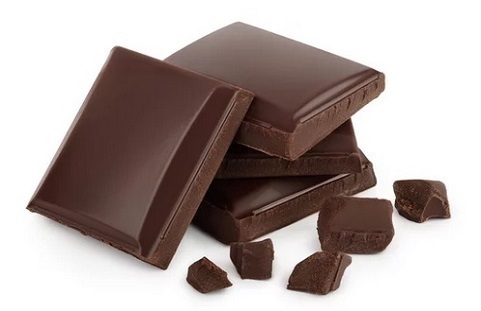
Chocolate and chocolate products from Poland
For years, Poland has been strengthening its position as one of the key exporters of chocolate products in Europe. Chocolate exports constitute an important segment of Polish foreign trade and cover a wide range of chocolate products
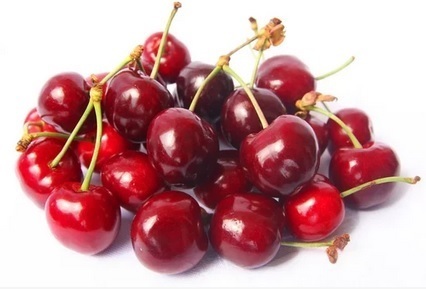
Cherry Export. Polish Cherries Around the World
The export of cherries from Poland is playing an increasingly important role in the international fruit market.

Cosmetics export. Cosmetics from Poland
The export of cosmetics and toiletries from Poland is developing at a dynamic pace, thanks to which Poland has gained the status of one of the leaders in the production and sale of these products in Central and Eastern Europe

Export of Windows: Window Joinery from Poland
Poland has been playing an important role on the international window market for many years, being one of the largest window exporters in the world.
FTA - Free Trade Agreements: Do They Exist and Can They Lower Tariffs?
Free Trade Agreements (FTAs) are key tools in international trade policy, aimed at reducing trade barriers...

Help needed ?
If you have not found the desired product, company, service or the searching results are not satisfactory for you, do not hesitate to contact us and tell what you are looking for or what you need. We will send your inquiry directly to the interested companies.
Write to us


Our partners
Featured companies the export industry
Conhpol
Stanisław Dolny 400A
34-130 Kalwaria Zebrzydowska
Phone+48 (33) 876 76 66
Fax.+48 (33) 876 70 17
Fax.+48 (33) 876 70 17
.jpg)
S plastic Sp. z o.o.
ul. Jaskółek 16
43-215 Studzienice
Phone+48 (32) 449 00 00
KRA-BOX Adam Krasieńko
ul. Mrówcza 94B
04-762 Warszawa
Phone+48 (22) 615 21 61
Fax.+48 (22) 615 66 62
Fax.+48 (22) 615 66 62
Tulilo Sp. z o.o.
ul. Wapienicka 4B
43-382 Bielsko-Biała
Phone+48 664 197 845
Metal Design
Aleja Marszałka Józefa Piłsudskiego 70
18-400 Łomża
Phone+48 502 467 201