pl
pl  en
en  de
de  es
es  fr
fr  it
it  pt
pt  ru
ru  sv
sv Selected categories:
Below is a list of Polish companies, along with a short profile, that offer the products or services you are looking for:
Machining - milling, grinding, turning
If you decide to contact them, please let the company know that you found their offer on Poland-Export – it will help facilitate future cooperation.



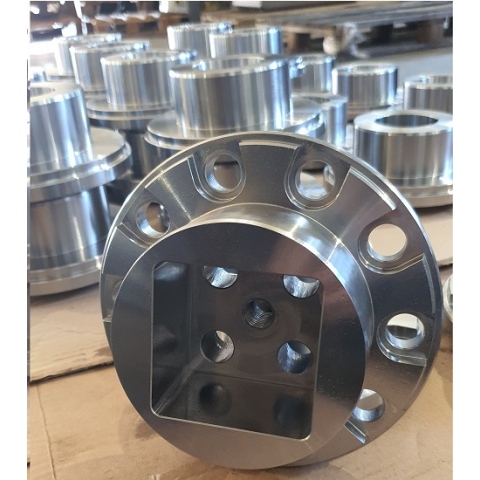
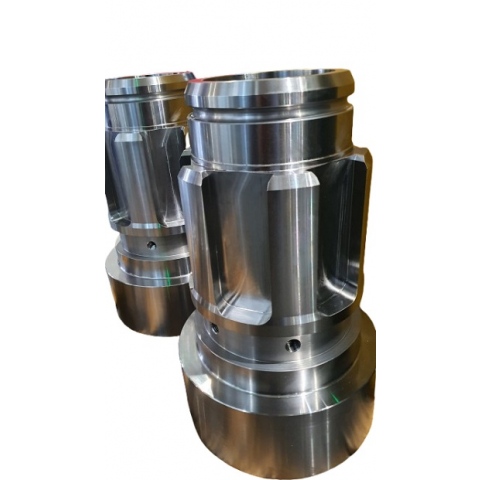
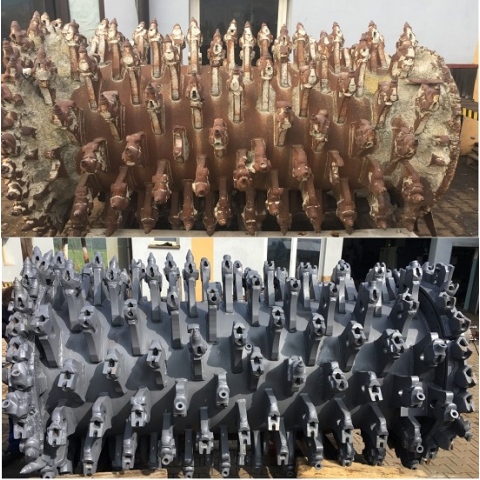

Piomet offers a wide range of metal machining
services. We specialize in CNC machining,
MIG-MAG welding, TIG welding of stainless steel,
refurbishment of milling drums for the road
industry, rotors for soil stabilization, mulchers
for the forestry industry, road milling machines.
We provide comprehensive services from design
through prototyping to production.
- Phone +48 693 436 012
- Phone +48 603 167 222



3D PRO
64-100 Leszno
wielkopolskie, Poland


AIR-TECH-BUD SP. Z O.O.
32-700 Bochnia
małopolskie, Poland
ALTUS W. Szwec
30-398 Kraków
małopolskie, Poland
APJ Sikora
42-200 Częstochowa
śląskie, Poland
APX Technologie Sp. z o.o.
88-320 Strzelno
kujawsko-pomorskie, Poland
AUTOMEX Sp.j.
42-271 Częstochowa
śląskie, Poland
Barosz Gwimet Z.I.W. Sp. z o.o.
44-300 Wodzisław Śląski
śląskie, Poland
BUDRAD POLSKA Sp. z o.o.
16-080 Tykocin
podlaskie, Poland


Help needed ?
If you have not found the desired product, company, service or the searching results are not satisfactory for you, do not hesitate to contact us and tell what you are looking for or what you need. We will send your inquiry directly to the interested companies.
Write to us
See also industries
Did you know that:
CNC Machining – Step by Step Process Explained
CNC machining combines knowledge, experience, and precision. It enables the production of machine parts and components used across many industries – from construction and gas sectors to recycling, forestry, and rotomoulding. Behind every project lies a well-structured process – from understanding customer needs to final quality control.
How Cooperation with a CNC Machining Company Works
Each project begins with a detailed analysis of the client’s requirements. Sometimes it starts with complete technical documentation, while other times with a worn or damaged part that needs to be recreated. Based on this, specialists choose the right technology – turning, milling, grinding, or regeneration.
If no documentation exists, reverse engineering is used – analyzing and reproducing the geometry and functionality of the component. This allows the creation of parts no longer available on the market.
How to Choose the Right Machining Method – Turning or Milling
The choice depends on the type of part and the desired result. The two most common technologies are CNC turning and CNC milling.
What Is CNC Turning and When It Is Used
Turning is a process in which the workpiece rotates at high speed while the cutting tool removes layers of material. It is mainly used for rotational parts – shafts, bushings, cones, and cylinders.
Modern CNC lathes offer:
- high dimensional accuracy and repeatability,
- material savings,
- possibility of serial production of identical parts.
Conventional turning is still used for individual projects where flexibility and operator experience are crucial.
What Is CNC Milling and What Can Be Achieved
Milling is a process in which the tool – the mill – rotates around a stationary part, removing excess material. It enables flat surfaces, grooves, threads, and complex shapes to be produced.
Modern CNC milling machines allow multi-axis machining, ensuring precision, repeatability, and excellent surface finish.
What Is the Difference Between Milling and Turning
Both methods aim to shape the part accurately but differ in their principle:
- in turning, the workpiece rotates while the tool is fixed,
- in milling, the tool rotates while the workpiece is fixed.
In practice, turning is used for cylindrical parts, milling for flat or 3D components.
When to Choose Parts Regeneration
Regeneration restores worn or damaged parts to full functionality without buying new ones. It’s especially cost-effective when:
- a new component is expensive or unavailable,
- delivery times are too long,
- dismantling an entire unit would be costly,
- the part is no longer produced.
Technicians analyze the part’s condition and choose a repair method – turning, milling, or grinding. If needed, reverse engineering helps reproduce exact parameters.
With modern technology, regenerated parts often match the quality of new ones and extend machine lifespan.
Quality Control in CNC Machining
Every stage – from preparation to final finishing – is subject to strict control. Operators monitor the process, take measurements, and verify compliance with documentation.
Advanced machining centers like DMG MORI CMX 70U and HAAS VF-3 ensure accuracy even in series production. Finished parts are supplied to various industries – rotomoulding, gas, forestry, recycling, and construction – where reliability and precision are key.
Why Entrust CNC Machining to Professionals
Combining experienced operators, modern CNC machines, and an individual approach makes CNC machining a foundation of modern industry. Professional service ensures perfect dimensions, high-quality finish, optimized costs, and shorter lead times.
Our partners